
Earnest Money in California: How Much and When You Could Lose It

How much earnest money do you need in Orange County, and when can you lose it?
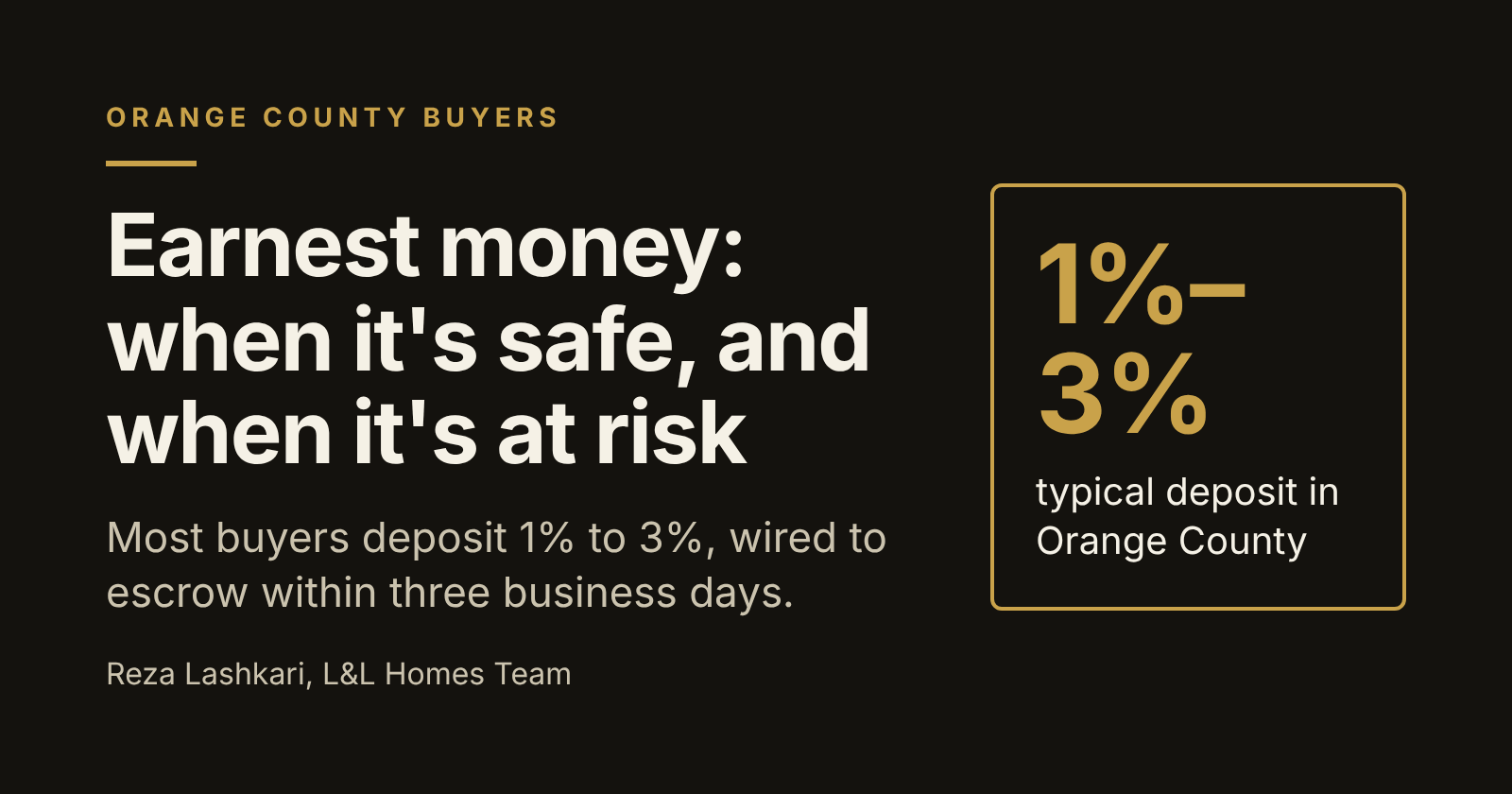
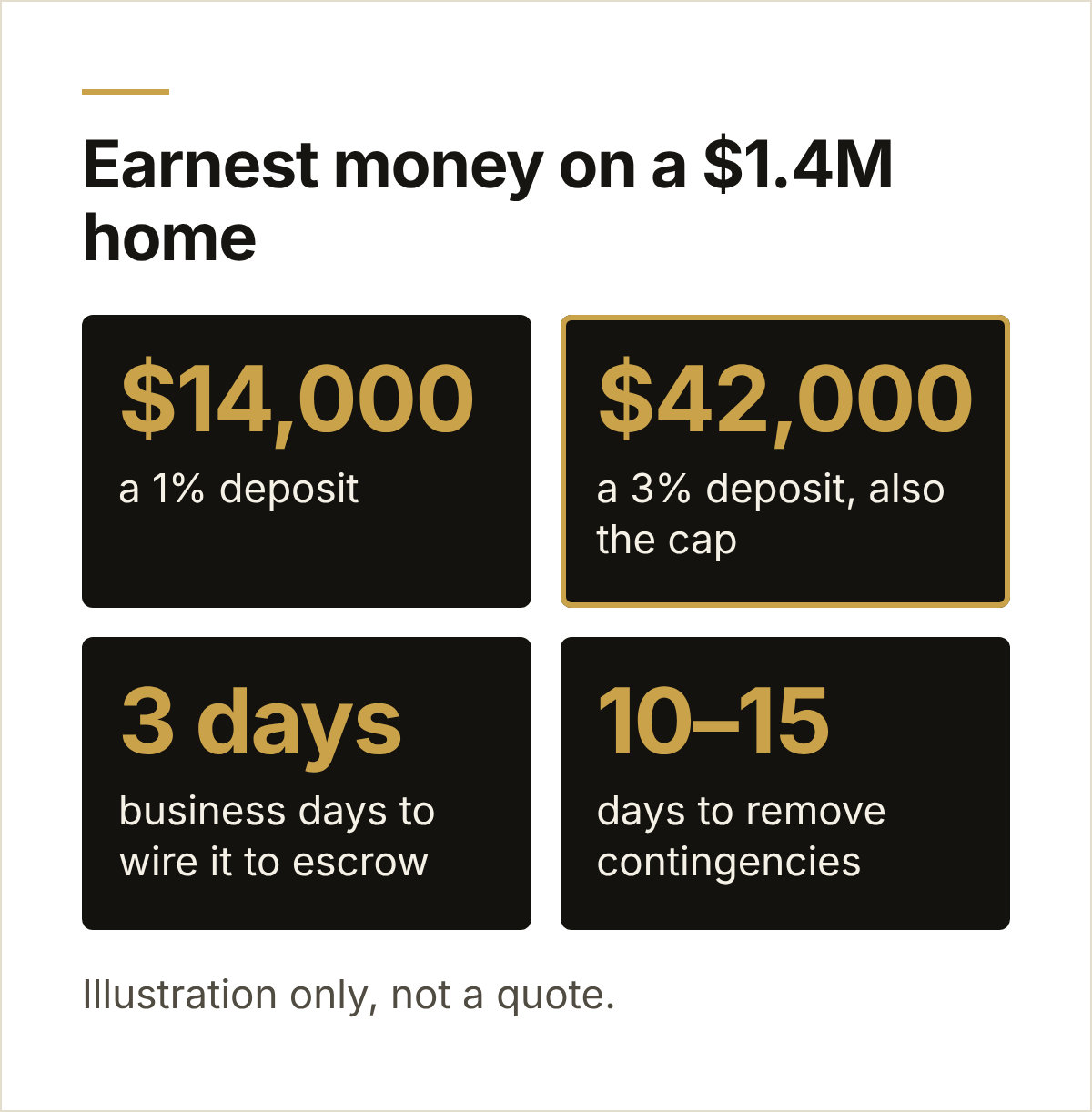
In Orange County, buyers typically put down an earnest money deposit of about 1% to 3% of the purchase price, wired to escrow within three business days of acceptance unless the contract says otherwise. On a $1.4 million home, that's roughly $14,000 to $42,000. You generally get it back if you cancel during an active contingency inspection, appraisal, or loan for a reason the contract allows. Once you remove contingencies in writing and then back out, the seller may be able to keep it, up to 3% of the price if you signed the liquidated damages clause and the home will be your residence.
By Reza Lashkari | September 29, 2026 | 5 Minute Read
It's one of the most common questions I get right after an offer is accepted usually from buyers who just wired more money than they've ever moved at once.
How the deposit works
The deposit shows the seller you're serious. It doesn't go to the seller. It sits in the escrow company's trust account until closing, when it's credited toward your down payment and closing costs. Also budget for the supplemental property tax bill that arrives after closing.
Here's the usual sequence in California:
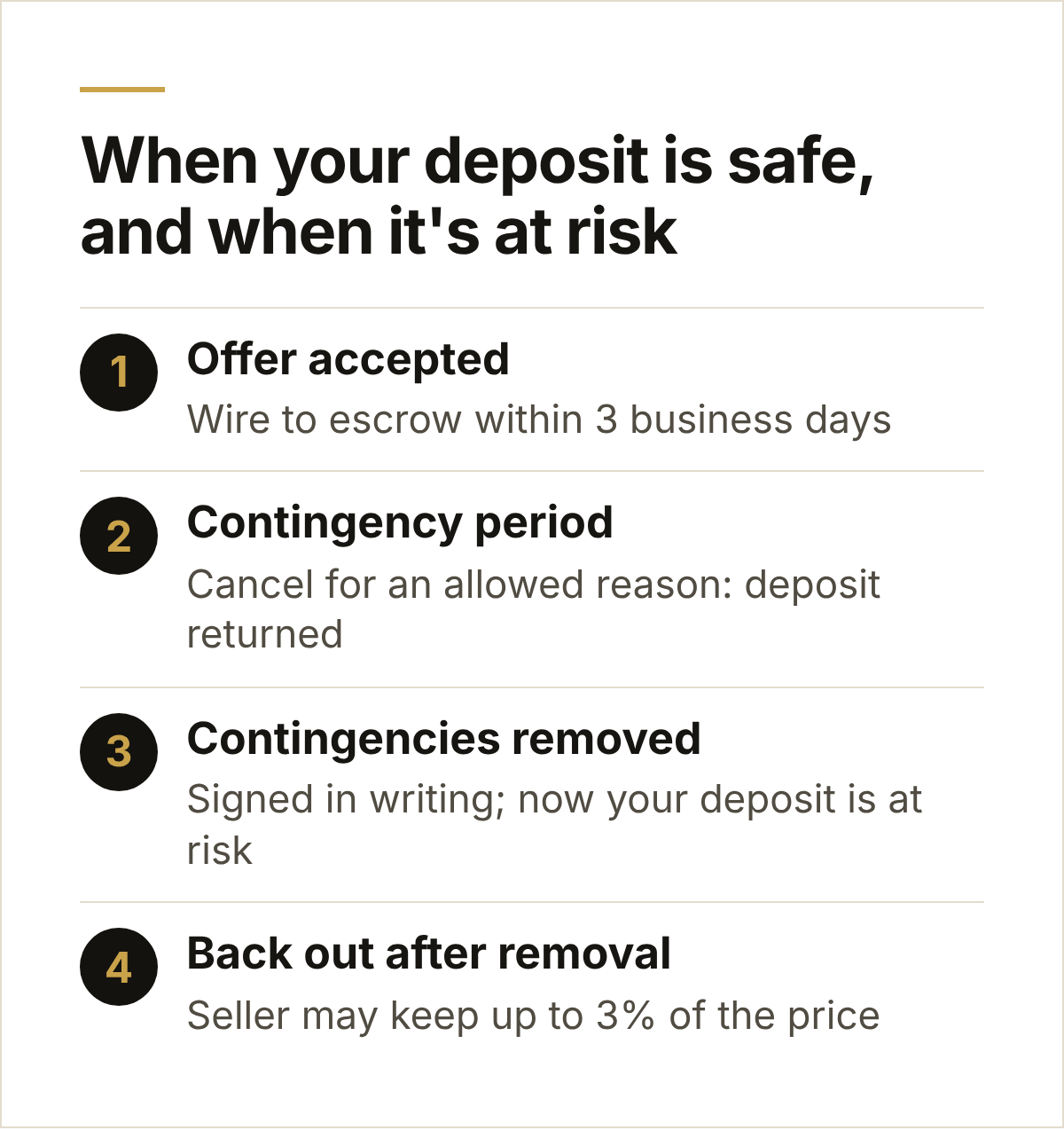
- Offer accepted. The contract sets the deposit amount and due date.
- Wire to escrow. Default is three business days. Call escrow at a verified number to confirm wire instructions before sending wire fraud is a real risk.
- Contingency period. You complete inspections, review disclosures, get the appraisal, and finalize your loan.
- Contingency removal. You sign a Contingency Removal (CR) form for each contingency.
- Closing. The deposit is applied to your purchase.
How much should you offer?
- 1% to 2% is common on standard offers.
- 3% signals strength in competitive situations and matches the liquidated damages cap.
- Larger deposits can help in multiple offers, but the amount above 3% isn't protected by the cap in the same way. Talk through the risk before you go bigger.
With about 43% of Orange County listings taking a price reduction in OC Real Estate Inc.'s September 28 report, many sellers are less focused on huge deposits and more focused on buyers who will close.
Deposit vs. down payment vs. closing costs
Buyers sometimes mix these up. The deposit is due in the first few days. The down payment is the rest of your equity, due just before closing. Closing costs lender fees, title, escrow, prepaid taxes and insurance — are separate and usually run about 2% to 4% of the price for Orange County buyers. Your deposit counts toward the total, so plan your cash in one budget, not three.
Where the money should come from
Your lender will want to see where the deposit came from. Wire it from an account you've already documented, keep the statements, and avoid moving money between accounts right before you wire. If part of it is a gift from family, ask your lender for the gift letter requirements before the funds move. Sorting this out early prevents last-minute underwriting questions.
Moving here from out of state? See what relocating buyers should budget in Orange County.
When you get the deposit back
You're generally protected when you cancel for a reason the contract allows, before the related contingency is removed. For example:
- Inspection: the inspection turns up issues you're not comfortable with, and you cancel within your investigation period.
- Appraisal: the home appraises low and you cancel before removing the appraisal contingency.
- Loan: your financing falls through before you remove the loan contingency.
- Disclosures: you receive seller disclosures and cancel within the time the law and contract allow.
Even then, escrow can't release the money on its own. Both buyer and seller sign cancellation instructions. If one side refuses, the funds stay put until the dispute is resolved often through mediation under the purchase agreement.
If the value comes in short, here are your options when an appraisal comes in low.
When the deposit is at risk
The risk comes after you've removed contingencies. At that point, backing out because you changed your mind, found another house, or got cold feet is usually a breach.
The 3% liquidated damages cap
The California purchase agreement includes a liquidated damages clause that both parties initial. When it applies to a one-to-four-unit home the buyer intends to live in, the seller's damages are limited to what the buyer actually deposited, up to 3% of the purchase price. Any amount above 3% is returned to the buyer.
On a $1,400,000 purchase:
- 3% cap: $42,000
- If you deposited $30,000, that's the most the seller could keep under the clause.
- If you deposited $50,000, the amount above $42,000 would come back to you.
If you don't initial the clause, the seller could pursue actual damages instead which can be more or less than 3%. That's a conversation for a real estate attorney.
How to protect your deposit
- Read your contingency deadlines and put them on your calendar the day you're in contract.
- Schedule inspections immediately. In our market, contingency removals often happen in 10 to 15 days.
- Talk to your lender weekly so a financing problem shows up before your loan contingency date.
- Get insurance quotes early, especially in fire-exposed areas.
- Don't remove a contingency until you're confident in that part of the deal.
- Ask for an extension in writing if you need more time before the deadline passes.
If you're buying and selling at the same time, the deposit timeline matters even more. See our post on whether to sell first or buy first when rates are over 7%.
Here is more on whether to waive contingencies to win an offer in Orange County.
What if the seller backs out?
Deposits protect sellers, but buyers have remedies too. If a seller refuses to close without a valid reason, the buyer's deposit should be returned, and the buyer may have other legal options under the contract. The purchase agreement also requires mediation before most disputes go further. If you ever find yourself in that situation, talk to a real estate attorney quickly.
Frequently Asked Questions
How much earnest money is typical in California?
Most buyers deposit about 1% to 3% of the purchase price. In Orange County, 3% is common when you want your offer to look strong.
When is earnest money due in California?
The purchase agreement defaults to three business days after acceptance, but the parties can agree to a different time. Always verify wire instructions by phone with escrow.
Can the seller keep my earnest money if I back out?
If you cancel within an active contingency for a reason the contract allows, you should get it back. If you back out after removing contingencies, the seller may be entitled to keep it, typically up to 3% of the price under the liquidated damages clause.
Who holds the earnest money in Orange County?
A neutral escrow company holds it in a trust account. It's released only with signed instructions from both buyer and seller, or by court order.
Is earnest money part of my down payment?
Yes. At closing, it's credited toward your down payment and closing costs.
Ready to Write an Offer With Confidence?
Your deposit is protected when your timeline is protected, so the details of your contingencies matter as much as the price. If you're competing against cash offers without a home to sell, our Dream Program gives you the strength of a cash buyer so your offer stands out. Learn more about the Dream Program, or reach out and I'll walk you through every deadline before you sign.

About Reza Lashkari
Reza Lashkari is the Team Leader of L&L Homes Team at Real Broker, with 13+ years of experience helping buyers and sellers across Orange County. A Mission Viejo resident and longtime local youth sports coach, Reza guides families through every step of buying, selling, and relocating, whether they are moving up, downsizing, or moving across the country.CA DRE #02195314 | Broker DRE #02022092 | 949-826-8100 | reza@llhomesteam.com
This article is for general information only and is not legal, tax, or financial advice. Rates, fees, and eligibility for loans and programs change frequently and vary by lender. The figures above are published estimates and illustrations, not quotes. Consult your lender and tax professional about your situation. Reza Lashkari, CA DRE #02195314, L&L Homes Team at Real Broker (Broker DRE #02022092). Equal Housing Opportunity.
Categories
Recent Posts









Realtor License ID: 02195314, 9527841, RES.0044054
+1(949) 826-8100 | reza@llhomesteam.com