
Rate Buydown or Price Cut? What Orange County Sellers Should Offer

Rate Buydown or Price Cut? What Orange County Sellers Should Offer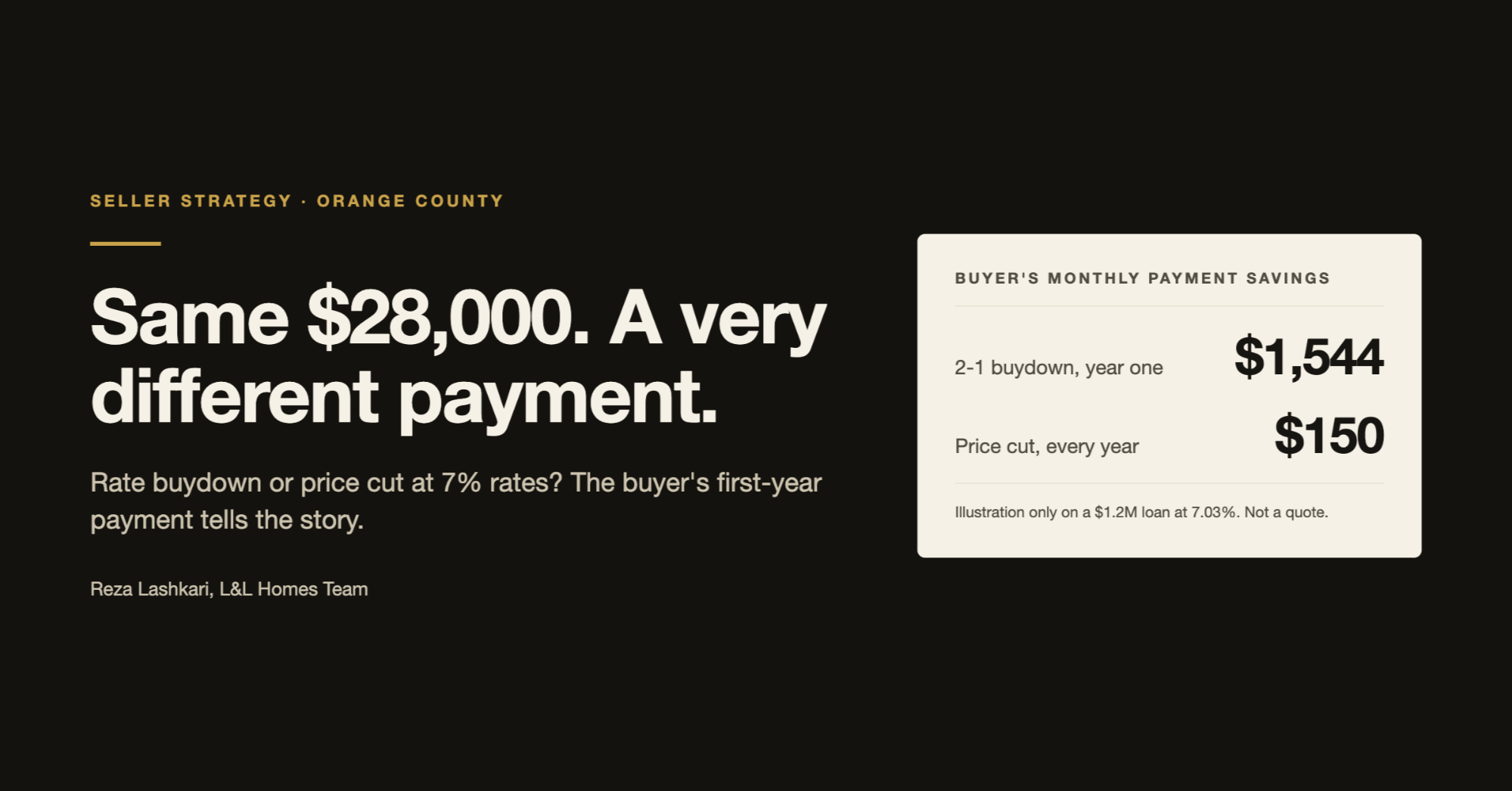
Reza Lashkari | October 3, 2026 | 7 Minute Read
Short answer: At 7% mortgage rates, a seller-paid rate buydown can cut a buyer's monthly payment far more than the same dollars spent on a price reduction. On a $1.2 million loan, a roughly $28,000 temporary buydown lowers the payment by about $1,544 a month in year one, while a $28,000 price cut lowers it by only about $150 a month. The trade-off is that a buydown is temporary, and a price cut is permanent. Which one is better depends on your buyer, your price range, and how fast you need to sell.
What Changed This Month?
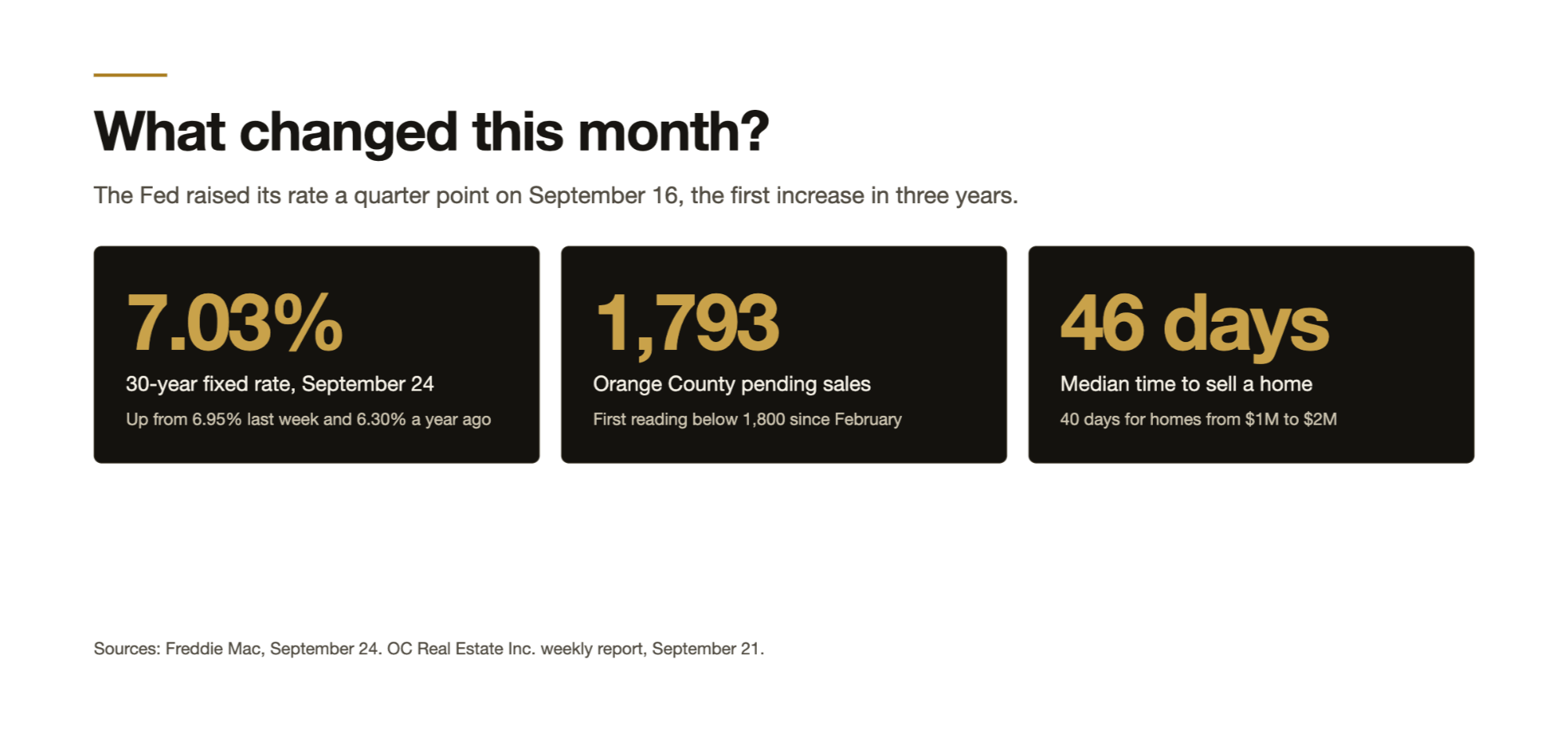
On September 16, the Federal Reserve raised its benchmark rate by a quarter point, its first increase in three years. On September 24, Freddie Mac reported the average 30-year fixed rate at 7.03%, up from 6.95% the week before and from 6.30% a year ago.
Orange County buyers are feeling it. According to a September 21 weekly report from OC Real Estate Inc., pending sales dropped to 1,793, the first reading below 1,800 since February, and the median home is taking 46 days to sell. The same report notes that just over a third of the county's inventory is priced under $1 million, and that segment is cooling first. Homes in the $1 million to $2 million range were taking a median of 40 days.
When a home isn't moving, the reflex is to cut the price. At these rates, that isn't always the smartest move.
What Is a Seller-Paid Rate Buydown?
A rate buydown means you, the seller, contribute money at closing to lower the buyer's interest rate. There are two main versions:
- Temporary buydown (such as a 2-1). The rate is lowered by 2 percentage points in year one and 1 point in year two, then returns to the full note rate in year three. The seller's money is held in escrow and used to cover the difference in the buyer's payment.
- Permanent buydown. The money pays discount points, which lower the rate for the life of the loan.
HomeLight puts the cost of a temporary 2-1 buydown at roughly 2% to 3% of the loan amount. Lender pricing varies by loan and by day, so ask a lender for a real quote rather than relying on rules of thumb.
 How Do the Numbers Compare?
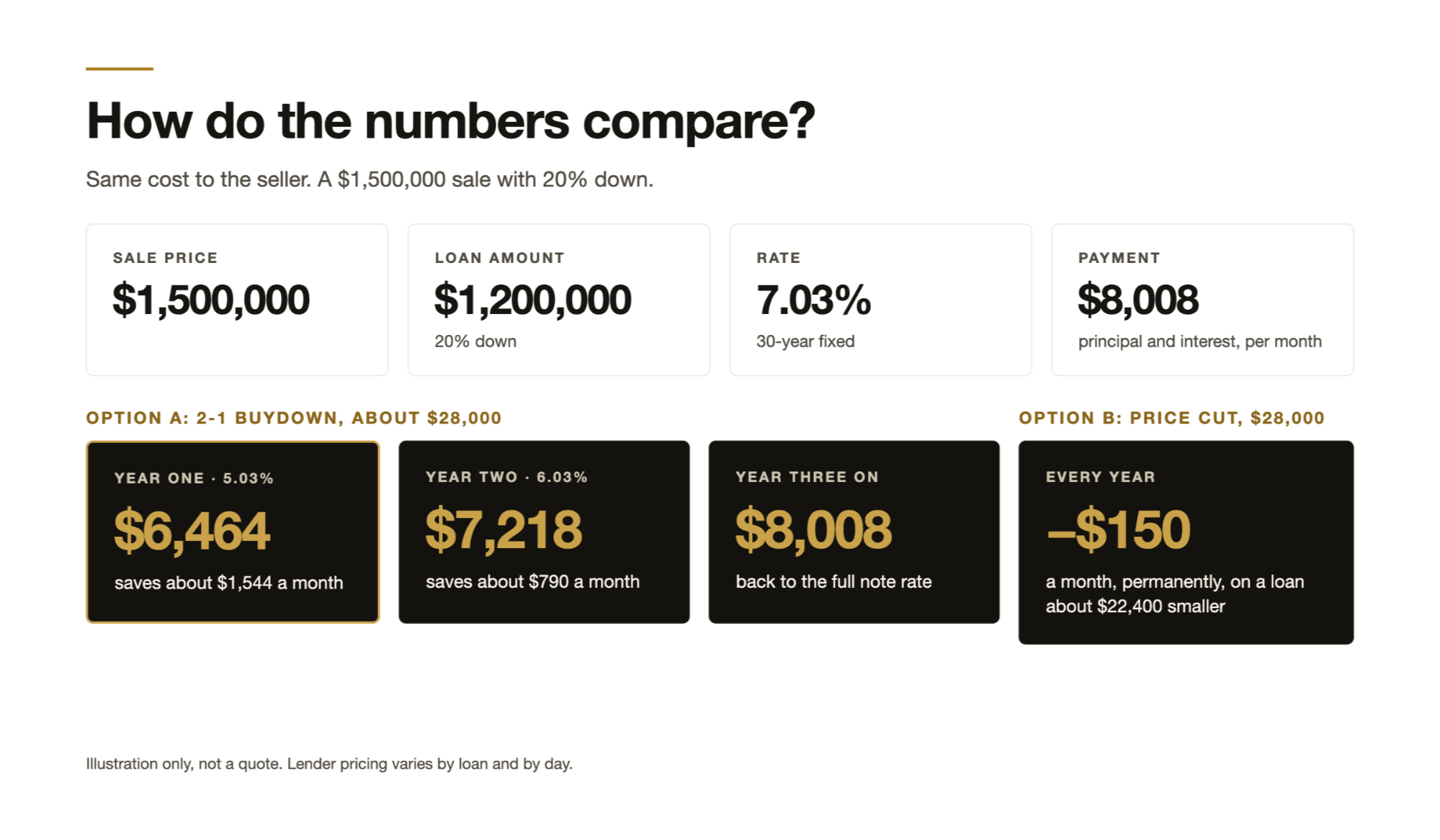
Here's an illustration, not a quote. Say a home sells for $1,500,000 with 20% down, which makes the loan $1,200,000 at 7.03%. Principal and interest is about $8,008 a month.
Option A: a 2-1 buydown.
- Year one, at 5.03%: about $6,464 a month, a savings of roughly $1,544
- Year two, at 6.03%: about $7,218 a month, a savings of roughly $790
- Year three onward: back to about $8,008
- Total cost to the seller: about $28,000, or roughly 2.3% of the loan
Option B: a price reduction of the same $28,000.
- The loan drops by about $22,400 (80% of the cut)
- The payment falls by roughly $150 a month, permanently
- A lower price also slightly lowers the assessed value and the property tax bill
Same cost to you. A very different experience for the buyer in the first two years. The buydown gives them serious payment relief right when they're moving in and buying furniture, and it doesn't put a lower sale price into the neighborhood's comparable sales. HomeLight's own example makes a similar point on a smaller loan: paying a roughly $8,500 credit instead of a $20,000 price reduction left the seller with about $11,500 more in proceeds.
When Does a Buydown Make More Sense?
A buydown tends to work better when:
- Your buyer is payment-constrained. Most buyers stretching to reach a monthly number care more about payment than price.
- You want to protect your sale price. A lower recorded price affects comparable sales for you and your neighbors.
- Your buyer expects rates could ease. A temporary buydown lets them plan to refinance later.
- Your home is priced right but sitting. If the price is already correct, a cut may just reduce your proceeds without changing buyer behavior.
When Is a Price Cut the Better Move?
A price reduction may be better when:
- The home is simply overpriced. A buydown can't fix a price that doesn't match comparable sales.
- The buyer needs to qualify on paper. Lenders generally qualify buyers at the full note rate for a temporary buydown, so it helps cash flow but often does not help a buyer qualify. Confirm with the lender.
- The buyer wants permanence. A price cut lowers the loan for all 30 years.
- The home has condition issues. If it needs work, a price adjustment or repair credit is often cleaner than a rate incentive.
What About a Permanent Buydown?
If a buyer wants a lower payment for the life of the loan, points can lower the rate permanently. As an illustration, dropping the rate on that same $1.2 million loan from 7.03% to 6.53% would reduce the payment by about $399 a month. The cost of the points depends on the lender, the day, and the loan, so it needs a real quote. Some buyers prefer this option, since it doesn't expire after two years.
How Much Can a Seller Actually Contribute?
Lenders cap seller concessions. For conventional loans on a primary residence, the limit generally depends on the down payment: about 3% with less than 10% down, 6% with 10% to 25% down, and 9% with more than 25% down. FHA and VA loans have their own limits. Those limits cover all seller credits combined, including closing costs, so a buydown uses up room that could have gone to other things. Have the buyer's lender confirm the number before you write anything into a counteroffer.
This is where a local agent earns their fee. In a market that has split in two, with cooling activity below $1 million and steadier demand above it, we have to look at what your specific buyers need. If you're also buying your next home, the order matters as much as the incentive, and I walk through that in our post on whether to sell first or buy first when rates are over 7%.
What If You're the Buyer?
You can ask for this too. When homes are sitting longer, buyers have more room to request help with closing costs, a repair credit, or a rate buydown instead of waiving contingencies. If your goal is the lowest monthly payment in the first two years, ask for a buydown. If your goal is the lowest total cost and a permanently smaller loan, ask for a price reduction. Our Dream Program gives buyers who don't have a home to sell the strength of a cash buyer, which can make an offer with a buydown request stand out. It is a cash-offer program, not a loan, and eligibility and terms depend on your situation.
Frequently Asked Questions
Is a rate buydown better than a price reduction for sellers?
Sometimes. A temporary buydown often gives the buyer far more monthly relief per dollar, and it protects your sale price. A price reduction lowers the loan permanently and is simpler. The right answer depends on your buyer and your price range.
How much does a 2-1 buydown cost?
HomeLight puts it at roughly 2% to 3% of the loan amount. On a $1.2 million loan at today's rates, my illustration comes to about $28,000, or about 2.3%. Your lender's quote is the number that counts.
Does a temporary buydown help a buyer qualify for the loan?
Usually not. Lenders generally qualify buyers at the full note rate, so a temporary buydown improves cash flow in years one and two but doesn't change what the buyer can qualify for. Confirm with the buyer's lender.
Is there a limit on how much a seller can pay?
Yes. For conventional primary-residence loans, the cap is generally 3%, 6%, or 9% of the price, depending on the down payment. FHA and VA loans have different limits. Lenders check this, so confirm early.
Should I offer a buydown before I get an offer?
You can advertise a seller credit, and it may draw more buyers, but I'd only do it after we've looked at your price and your comparable sales. A credit doesn't rescue an overpriced listing.
Ready to Decide What to Offer?
Competing against cash offers without a home to sell? Our Dream Program gives you the strength of a cash buyer so your offer stands out. Learn more about the Dream Program. If you're a seller weighing a price cut against a buydown, use the contact form on this page and I'll run the numbers on your home with a lender.
 About Reza Lashkari
Reza Lashkari is the Team Leader of L&L Homes Team at Real Broker, with 13+ years of experience helping buyers and sellers across Orange County. A Mission Viejo resident and longtime local youth sports coach, Reza guides families through every step of buying, selling, and relocating, whether they are moving up, downsizing, or moving across the country.CA DRE #02195314 | Broker DRE #02022092 | 949-826-8100 | reza@llhomesteam.com
This article is for general information only and is not legal, tax, or financial advice. Rates, fees, and eligibility for loans and programs change frequently and vary by lender. The figures above are published estimates and illustrations, not quotes. Consult your lender and tax professional about your situation. Reza Lashkari, CA DRE #02195314, L&L Homes Team at Real Broker (Broker DRE #02022092). Equal Housing Opportunity.
Tags: Selling, Buying, Orange County, Rising Interest Rates, Mortgage
Categories
Recent Posts



Realtor License ID: 02195314, 9527841, RES.0044054
+1(949) 826-8100 | reza@llhomesteam.com