
Red Flags to Look for When Touring a Home in Orange County

What are the red flags when touring a home?

The biggest red flags are signs of water (stains, soft floors, musty smells), foundation and structural movement (cracks, sloped floors, sticking doors), drainage problems near the house, old or DIY electrical, unpermitted additions, and fresh paint in odd places that might hide damage. In Orange County, also watch for hillside drainage, aging tile roofs, and original plumbing in 1970s and 1980s homes. Spotting them early tells you what to inspect and how to price your offer.
By Reza Lashkari | November 05, 2026 | 4 Minute Read
A showing is your first inspection. You won't catch everything, but you can catch a lot.
What Should You Check Outside?
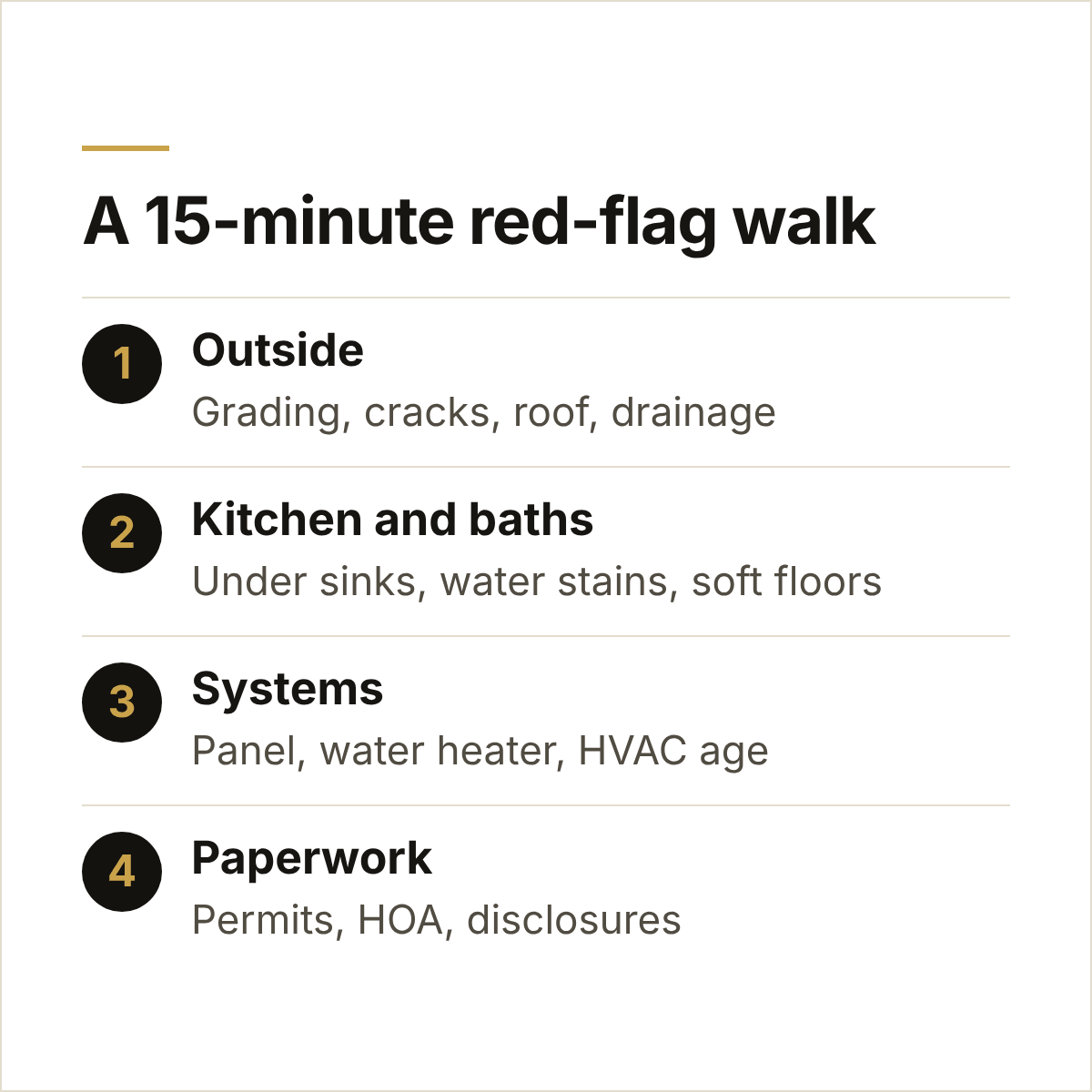
- Grading and drainage: soil should slope away from the house. Watch for pooling areas and clogged drains.
- Cracks in stucco and slab: hairline cracks are common. Wide or stair-step cracks deserve a closer look.
- Slopes and retaining walls: leaning walls or erosion on hillside lots can be costly.
- Roof: broken tiles, sagging lines, or patchwork repairs.
- Additions and garage conversions: ask whether they're permitted.
What Should You Check Inside?
- Under sinks: stains, warping, or active leaks.
- Ceilings and walls: water stains, especially below bathrooms.
- Floors: soft spots near toilets and tubs, or noticeable slopes.
- Doors and windows: sticking or uneven gaps can signal movement.
- Smells: mustiness can mean moisture or mold. Heavy air fresheners can mask it.
- Fresh paint on one patch of ceiling or wall: ask why.
What About the Systems?
- Electrical panel: some older panel brands have known issues. Look for scorch marks or a crowded, messy panel.
- Water heater: age is on the label. Ten to fifteen years is typical.
- HVAC: age and service history.
- Plumbing: ask whether the home has been repiped.
How Do You Tell Cosmetic From Serious?

Cosmetic issues like dated finishes, worn carpet, and paint are easy to fix and can even be bargaining points. Water, foundation, electrical, and sewer problems need professional inspections and real repair estimates before you commit.
What Questions Should You Ask the Listing Agent?
- How long have the sellers owned it, and why are they selling?
- Are there any known issues, past insurance claims, or repairs?
- Were additions and remodels permitted?
- Are there HOA special assessments or pending litigation?
- Have there been any price reductions or fallen escrows?
What Should You Do If You See a Red Flag?
- Don't panic. Many issues are fixable.
- Note it and plan the right inspection.
- Factor it into your offer or ask for a credit after inspections.
- Keep your inspection contingency. Read whether to waive contingencies before considering it.
If the home has issues and you love the location, a fixer approach can still work. And if the appraiser notices them too, here's what happens when an appraisal comes in low.
Which Red Flags Are Specific to South Orange County?
A few issues come up often in Mission Viejo and nearby cities:
- Tile roofs with failing underlayment. The tiles can look fine while the paper underneath is worn out. Look for stains in the attic or ceilings.
- Hillside lots and slopes. Check drainage, retaining walls, and any signs of soil movement.
- Original plumbing. Many homes from the 1970s and 1980s have aging copper or older supply lines. Ask if the home was repiped.
- Pool equipment age. Pumps, heaters, and filters can be costly to replace.
- Converted garages and patio enclosures. Ask about permits.
- Fire-hazard areas near open space. These can affect insurance cost and availability.
How Should You Document a Showing?
Take notes and photos as you go so you remember details later:
- Photograph the electrical panel label, water heater label, and HVAC unit.
- Snap any stains, cracks, or areas of concern.
- Note the age of the roof if the listing mentions it.
- Record room sizes and layout issues that matter to you.
That record helps you compare homes and plan inspections if you write an offer.
What Are Green Flags?
It's not all warnings. Homes that show these usually have fewer surprises:
- Recent permits for roof, HVAC, or repiping
- Organized service records and warranties
- Clean, dry attic and crawl spaces
- Good drainage with gutters and grading away from the house
- Updated electrical panel
Green flags don't replace inspections, but they're a good sign the home has been cared for.
Should You Bring Your Own Expert to a Showing?
For homes with obvious concerns, a contractor or roofer friend can help you decide whether to write an offer. Most of the time, it's better to tour, take notes, then order full inspections during your contingency period.
Frequently Asked Questions
What are the biggest red flags when buying a house?
Water damage, foundation movement, old or unsafe electrical, sewer line problems, and unpermitted work.
Are cracks in stucco a problem?
Hairline cracks are common and usually cosmetic. Wide, growing, or stair-step cracks should be evaluated by a professional.
Should I walk away from a house with unpermitted work?
Not always. It depends on what was done, whether it can be permitted, and how it affects insurance, financing, and price.
How can I tell if a house has water damage?
Look for stains, warped baseboards, soft floors, peeling paint, and musty smells, especially under sinks and around tubs.
What should I bring to a showing?
Your phone for photos and notes, a small flashlight, and your list of questions.
Ready to Tour With a Second Set of Eyes?
I walk every showing with my buyers and point out what matters and what doesn't, so you can focus on the right homes. If you're competing against cash, our Dream Program gives your offer the strength of a cash buyer.

About Reza Lashkari
Reza Lashkari is the Team Leader of L&L Homes Team at Real Broker, with 13+ years of experience helping buyers and sellers across Orange County. A Mission Viejo resident and longtime local youth sports coach, Reza guides families through every step of buying, selling, and relocating — whether they're moving up, downsizing, or moving across the country. CA DRE #02195314.
CA DRE #02195314 | Broker DRE #02022092 | 949-826-8100 | reza@llhomesteam.com
This article is for general information only and is not legal, tax, insurance, or financial advice. Rates, limits, fees, tax rules, and program eligibility change frequently and vary by situation. Figures above are illustrations, not quotes. Consult your lender, insurance agent, tax professional, or attorney about your situation. Reza Lashkari, CA DRE #02195314, L&L Homes Team at Real Broker (Broker DRE #02022092). Equal Housing Opportunity.
Categories
Recent Posts










Realtor License ID: 02195314, 9527841, RES.0044054
+1(949) 826-8100 | reza@llhomesteam.com